

The PS3 had a slightly shaky start when it launched in 2006. By this point, Microsoft’s Xbox 360 was beginning to build up steam, and people were excited by the prospect of motioned controlled gaming with Nintendo’s brand new Wii. Many franchises, typically released on Sony consoles, were making the jump to multi-platform, and people wondered if Sony’s third home console would live up to the expectations set by their second. By the next holiday season, we were starting to see some nice exclusives heading the PlayStation way, among which was Uncharted: Drake’s Fortune. The easiest, albeit slightly inaccurate way of describing this game would be “Tomb Raider meets Gears of War”, in that it combined the temple-exploring, ancient-artifact-finding elements of Lara Croft’s famous series with the duck-and-cover shooting mechanics made popular by Marcus Phoenix. However, one thing that Uncharted offered on top of these aspects was an exciting story to guide you along the path, which was further expanded on as the series progressed in the following years.
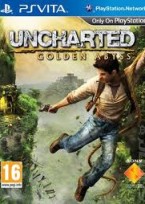
Uncharted: Golden Abyss carries on the tradition set by it’s predecessors, but does so in the most unlikeliest of places – on a system small enough to fit in your pocket (well, if you have big pockets, that is). I think it would be safe to say that the PlayStation Vita’s biggest launch title ushers in a whole new era of portable gaming, one in which access to the TV is no longer necessary to enjoy big budget blockbuster titles. I’ll try to keep this review focused on the game itself, rather than the brand new hardware running it, but I feel that the fun I had while playing this title had a lot to do with the system I held in my hands.

So lets get the easy stuff out of the way first. The biggest question many people have is whether or not Golden Abyss feels like it’s console brethren. The simple answer is, yes, it does. I’ll go into the changes later, but the most important thing to understand is that fans of the series will feel right at home jumping into Nathan Drake’s latest adventure: The exploration mechanics remain wholly unchanged, and the combat is as fun as it ever was, no doubt aided by the Vita’s excellent duel thumbsticks. Fans of the story may be a little disappointed, though, as while it’s good enough to keep the game progressing, it’s not quite up to the standards set by previous chapters in the series. If I had to guess why, I’d say it’s because the developers, SCE Bend, were trying so hard to emulate Naughty Dog’s (the developers of the PS3 games) plot style that it feels a little overused. All the elements we’ve come to expect are in there, such as love, betrayal, and a foreign antagonist out to retrieve the same treasure you are, but I suppose this is what fans demand of the franchise, and there would certainly have been cries of protest if things had strayed too far from this formula. I won’t spoil any specific plot points, but just don’t expect to be surprised by the events that unfold.
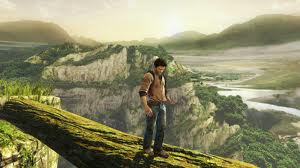
Graphically, Golden Abyss is certainly impressive, but not mind blowing. There’s no way it could ever match the visuals from the PS3 versions, simply because the screen resolution is a quarter of that found on an HDTV, but it’s still the nicest looking game I’ve ever played on a dedicated handheld. There were plenty of moments when I just had to stand and look around at the scenery, marvelling at what can be achieved with such small hardware. Unfortunately, there were an equal number of times when I noticed “jaggies”, especially in textures on characters’ clothing. This isn’t a fault of the game, though, but rather a limitation of the system itself. It seems that high power phones with high DPI screens, such as the iPhone 4S and Samsung’s Galaxy Nexus, have spoilt us a little with their smooth-as-silk 3D games, although no mobile could possibly compete with the precision of control offered by the Vita’s hardware buttons and duel thumbsticks.

While everything so far may seem pretty standard for an Uncharted game, the developers have made sure to include plenty of tweaks to the control system, taking advantage of all the new inputs Sony’s latest console provides. Some of these seem a little silly and gimmicky, such as the charcoal rubbings and artifact cleaning, both done with the touchscreen; some are decently implemented, such as camera and sniper rifle zooming, which is achieved by sliding your finger up and down the back of the system; but there are a couple that are actually quite nice additions: First, you can now draw a path for Nate to follow when traversing the dangerous environments, rather than jumping manually from ledge to ledge. This may sound like cheating to some, but when once you’ve figured out where to go, the journey there is really the easy part – plotting out a path to follow only saves a few button presses, and it never felt like the game was taking over for me. In the end, though, the nicest change is the ability to use SixAxis motion control when aiming your weapons. You can still use the right stick in the traditional way, but I only utilised it to get my gun pointed in the general direction, moving the entire system to line up my sights exactly. I may have looked a fool to others in the room, but I pulled off so many headshots thanks to the precision offered by this method, many more than I ever managed on the home console versions.

Before I wrap up, there are a couple more things I’d like to mention, one of which I liked and the other I didn’t. I liked the way the game handled collectibles, in that you can view which ones you’re looking for in any given chapter. As well as items to find, you’re also on the lookout for certain photos to take, although there were times when I swear I had the correct image in view and couldn’t get the camera prompt to appear. There’s also a bonus treasure map available for purchase on the PSN Store (£0.79/$0.99) which reveals the exact locations of all the hidden goodies. One element of the game I didn’t like was the puzzles. Although they’re few and far between, the sections where you have to line things up in the correct order, or move pieces into their appropriate places, are ruined by the distinct noise that plays whenever you get something right. This means that instead of actually having to solve the puzzles (which aren’t exactly difficult to begin with), you can simply move stuff around, waiting until each piece “dings” before moving onto the next. Have gamers really lost the ability to solve puzzles, or is it just developers these days who underestimate us?

So overall, I really enjoyed Uncharted: Golden Abyss. It’s not perfect, but provided quite a few hours of fun exploration and combat. It’s probably the first handheld game I’ve ever played that felt just like a home console title, and I must say that’s a pretty good feeling. I will almost certainly go back and play it on a harder difficulty setting, nabbing a few more collectibles and trophies along the way (I may even purchase the treasure map to aid me on my quest). Many have said that the age of the dedicated handheld has passed, now that mobile gaming has come so far, but if this is any indication of the quality of games portable systems can provide, I think the Vita will be safe for some time to come.
MasonGamer Rating 8/10 a Must Buy