
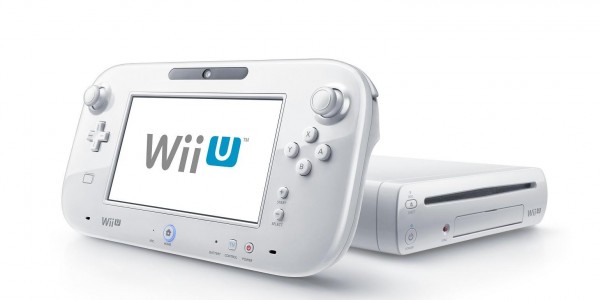
This is an extract from an article over at Eurogamer, called “The Secret Developers: Wii U – The Inside Story,” were an anonymous developer shares his experience of early-day development on the Wii U. It reveals some of the reasons why Nintendo is lacking third party support for their latest console.
“From reveal to launch and beyond - a third-party developer talks about the challenges of working with Nintendo and its latest console”. Here are some interesting quotes from the developer:
Then the new controller was shown as a dummy prototype, complete with a glossy video showing how it could be used in games as a series of mock-ups, which looked exciting. By this point we were all considering how we could use the controller in our games. But then they revealed the internal details of the console and I realised the reason for my earlier alarm bells. If Nintendo wanted the hardware to have a small footprint and be quiet, they needed minimal fan noise, meaning that cooling was limited, which in turn meant that the CPU would have to produce a minimal amount of heat, which meant that the clock speed would have to be kept low. While I can’t confirm specific details, the collective thoughts of the internet are presented for reference on Wikipedia.
Having worked on other hardware consoles, I suppose that we were rather spoilt by having mature toolchains that integrated nicely with our development environment. Wii U on the other hand seemed to be trying at every turn to make it difficult to compile and run any code. Nintendo had provided an integration of their development tools into Visual Studio - the de facto standard for development - but it didn’t work, not even close.
…
Now that the game was up and running on the console we could start developing features that would use the new controllers and make our game stand out on the platform. But soon after starting this we ran into some issues that the (minimal) documentation didn’t cover, so we asked questions of our local Nintendo support team. They didn’t know the answers so they said they would check with the developers in Japan and we waited for a reply. And we waited. And we waited.
After about a week of chasing we heard back from the support team that they had received an answer from Japan, which they emailed to us. The reply was in the form of a few sentences of very broken English that didn’t really answer the question that we had asked in the first place. So we went back to them asking for clarification, which took another week or so to come back. After the second delay we asked why it was taking to long for replies to come back from Japan, were they very busy? The local support team said no, it’s just that any questions had to be sent off for translation into Japanese, then sent to the developers, who replied and then the replies were translated back to English and sent back to us. With timezone differences and the delay in translating, this usually took a week!
…As far as the CPU optimisations went, yes we did have to cut back on some features due to the CPU not being powerful enough. As we originally feared, trying to support a detailed game running in HD put a lot of strain on the CPUs and we couldn’t do as much as we would have liked. Cutting back on some of the features was an easy thing to do, but impacted the game as a whole. Code optimised for the PowerPC processors found in the Xbox 360 and PlayStation 3 wasn’t always a good fit for the Wii U CPU, so while the chip has some interesting features that let the CPU punch above its weight, we couldn’t fully take advantage of them. However, some code could see substantial improvements that did mitigate the lower clocks - anything up to a 4x boost owing to the removal of Load-Hit-Stores, and higher IPC (instructions per cycle) via the inclusion of out-of-order execution.
On the GPU side, the story was reversed. The GPU proved very capable and we ended up adding additional “polish” features as the GPU had capacity to do it. There was even some discussion on trying to utilise the GPU via compute shaders (GPGPU) to offload work from the CPU - exactly the approach I expect to see gain traction on the next-gen consoles - but with very limited development time and no examples or guidance from Nintendo, we didn’t feel that we could risk attempting this work. If we had a larger development team or a longer timeframe, maybe we would have attempted it, but in hindsight we would have been limited as to what we could have done before we maxed out the GPU again. The GPU is better than on PS3 or Xbox 360, but leagues away from the graphics hardware in the PS4 or Xbox One.
There are some fleeting parallels between Wii U and the next-gen consoles - the combination of a low-power CPU with a much more powerful graphics chip - but the notion of next-gen titles being easily portable to the Wii U just doesn’t work. The gulf in power is just too high, while the GPGPU that we’ll see on Xbox One and PlayStation 4 isn’t compatible with the older shader model four hardware found in the Wii U.
Doubtless, the first-party developers at Nintendo will make the hardware sing - they always do - but the situation looks grim for those of us in third-party development, with the opportunity to progress on the hardware held back by both the quality of the tools and the lack of financial reward for tailoring our code to the strengths of the hardware. So where does that leave the Wii U?
Personally I’m not sure on what will happen, but if the current trends continue, the Wii U will probably continue to sell in small quantities until a “must have” title is released, probably from a first-party studio, at which point the sales will sky rocket for a while - but even so, matching the momentum of PlayStation 4 and Xbox One seems highly unlikely. Other variables such as the recent news regarding China lifting the ban on games consoles may influence Nintendo’s future direction. This huge untapped market may provide a lifeline in terms of sales, but with the low wages of the general population these sales might well come from the original Wii, rather than the more expensive Wii U.
Head over to EuroGamer and read the full article HERE